Global standards alignment · Digital Assets Select30 (DAS30)

A digital-asset sustainability index built for evidence

Mugano Digital Assets Select30 (DAS30) is a global standards-aligned index and evidence-readiness framework for digital assets, mapping source-backed ESG, climate, and governance data to ISSB/IFRS, GRI, ESRS/CSRD, TCFD/TNFD, CDP, and MiCA workflows.

Standards-aligned, not standards-certified. Mugano helps teams see which sustainability rows are sourced, proxied, reviewed, or blocked before external disclosure, client use, or index-methodology publication.
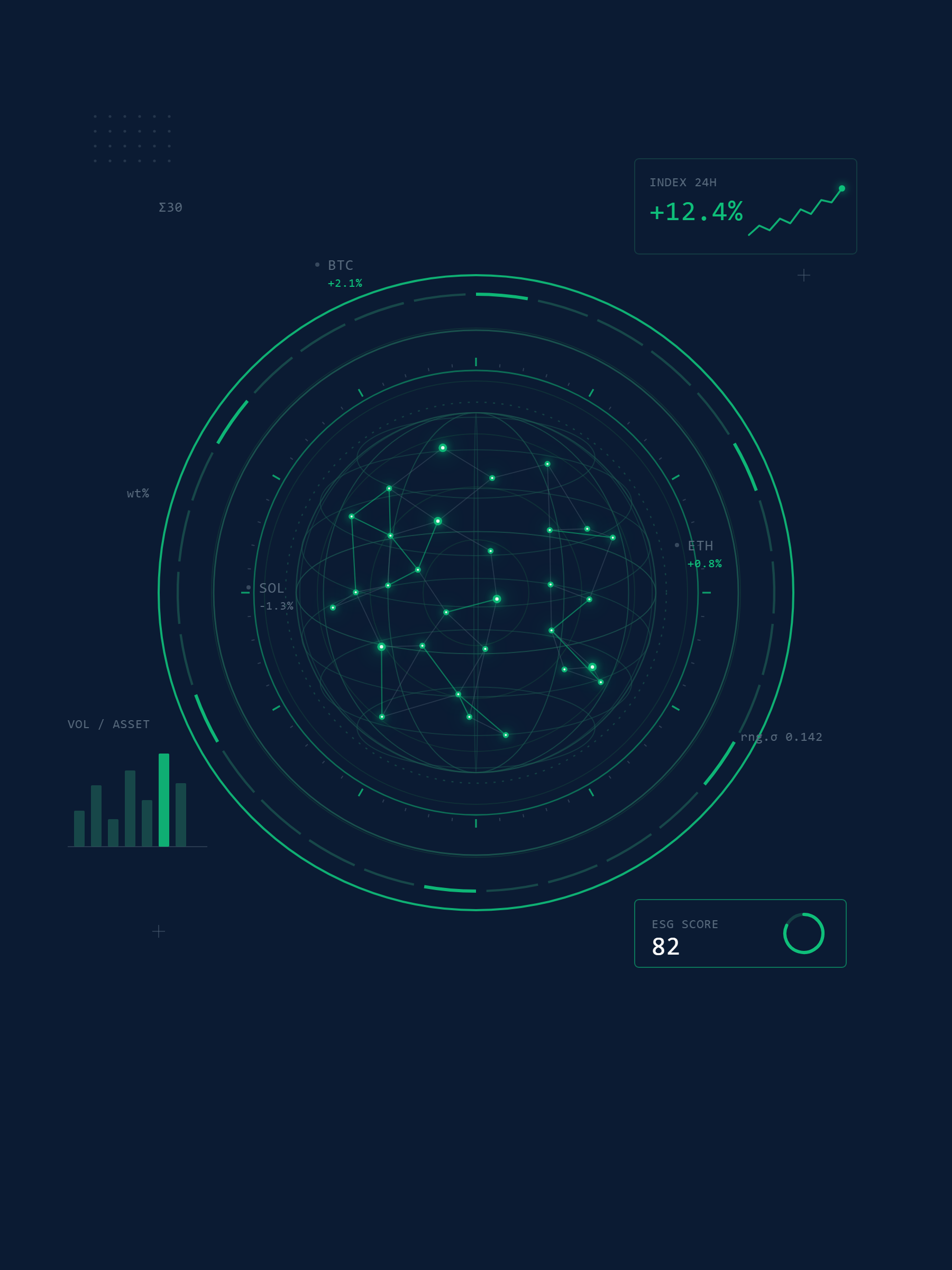
Digital Assets Select30 (DAS30) data orb showing index, ESG score, and asset signals
Digital Assets Select30 (DAS30) Evidence-led ESG index methodology
Designed to map to
ISSB / IFRS S1-S2 GRI ESRS / CSRD TCFD / TNFD CDP MiCA Sustainability Fields
The Standards Gap

Crypto sustainability data does not travel cleanly across global standards

Digital-asset teams are being asked to support investor, stakeholder, climate, nature, product, and regulatory disclosures. The hard part is proving which data is source-backed, which is estimated, and which rows are not ready for external use.

01
Fragmented source evidence

Energy, emissions, market, governance, developer, and controversy data sit across different providers, protocols, reports, APIs, and update cycles.

02
Different standards, different lenses

ISSB, GRI, ESRS, CDP, TCFD, TNFD, MiCA, and regional rules do not ask the same question. One ESG score cannot safely answer them all.

03
Proxy and boundary risk

Digital assets do not map neatly to issuer-level Scope 1, 2, and 3 boundaries. Network-level estimates need clear caveats before use.

04
Index claims need evidence gates

A sustainability index is only defensible when methodology outputs are separated from sourced facts, proxy rows, scenario outputs, and human-review status.

Architecture

Five layers. One reusable evidence core.

Mugano structures digital-asset sustainability data so the same governed evidence base can support index methodology, due diligence, and standards-aligned disclosure workflows.

01 —
Source Registry

Records preferred, secondary, proxy, and inherited sources for energy, emissions, governance, market, security, and controversy evidence.

02 —
Standards Crosswalk

Maps metrics and caveats to ISSB/IFRS, GRI, ESRS/CSRD, TCFD/TNFD, CDP, MiCA, and regional climate disclosure lenses.

03 —
AI-Assisted Evidence Checks

Uses AI to flag missing sources, repeated manual research, stale rows, proxy treatment, and rows that need human review.

04 —
Select30 Index Engine

Translates source-backed ESG and climate-risk signals into transparent scoring, weighting, and methodology outputs for a 30-asset universe.

05 —
Readiness Gates

Separates internal analytics, investor-draft use, regulatory candidates, and blocked rows before anything is used externally.

Why It Holds Up

Built for evidence, not slogans

The framework is designed to make sustainability claims traceable, reviewable, and controlled across multiple standards without pretending one methodology is a universal compliance certificate.

01
Transparent Formula

Scores, weights, and ranks are documented as methodology outputs, not absolute sustainability truth or filing values.

02
Standards Crosswalk

A global map connects each metric to investor, stakeholder, climate, nature, environmental questionnaire, and regional disclosure uses.

03
Source Confidence

Every row can carry source tier, confidence, retrieval date, and whether it is directly sourced, estimated, proxied, or inherited.

04
Boundary Caveats

Network-level energy and emissions estimates are kept separate from issuer, foundation, operator, or service-provider disclosure boundaries.

05
Evidence Registry

Raw observations, API snapshots, hashes, source notes, and review status support a traceable evidence trail.

06
Human Review

AI can support evidence checking, but external-use candidates still require named human review and channel-specific approval.

Pilot Options

Start with a controlled evidence pilot

The best first step is a small, defensible review of selected assets. No claim is treated as external-ready until the source, review, and channel gates pass.

10-Asset Pilot
Pilot

A focused evidence-readiness review for a defined digital-asset sample.

  • Source and evidence gap scan
  • Standards crosswalk snapshot
  • Proxy and blocked-row flags
  • AI-assisted source-gap review
  • Human-review checklist
  • Readiness summary for external use
Designed for first conversations. See what is sourced, proxied, blocked, and ready for deeper review.
Request Pilot
Platform Partnership
Custom

For exchanges, CASPs, asset managers, data providers, and multi-jurisdiction product teams.

  • Custom asset universe
  • Jurisdiction and standard mapping
  • Evidence workflow design
  • API/data provider integration planning
  • Review-ready evidence pack
  • Ongoing methodology governance
Scoped by use case. Best for teams building sustainability-aware digital-asset products or disclosure workflows.
Request Scope Call
Global standards alignment means structured evidence, framework mapping, and review gates. It does not mean automatic compliance, legal approval, or assurance-ready reporting without separate jurisdiction-specific review.
Get Started

Global standards are converging. Can your digital-asset data explain its sources?

Book a short pilot call to review the Select30 evidence workflow and see how your asset universe could be mapped across global sustainability standards.

Book a Pilot Call